A Journey Through Time: The Legacy of Our Heritage Family Farm
Nestled amidst the picturesque landscapes of Andrew, Iowa, lies a cherished piece of our family history – the Heritage Farm. Over 150 years ago, Joe’s great-grandpa and his children’s great-great-grandpa embarked on an extraordinary adventure to establish what we now lovingly call the Heritage Farm. This story is a testament to the enduring spirit of family and how generations of agriculture grow on our farm.
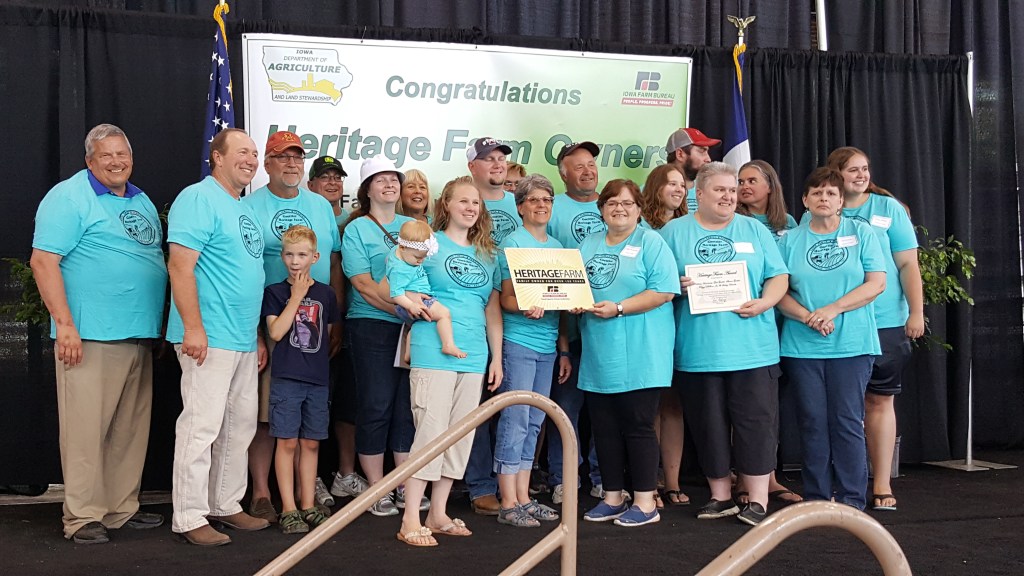
Members of the Goettler Family accepting the Hertiage Farm Award at the Iowa State Fair for farms that have been in the same family for 150+ years.
The Journey to Andrew, Iowa
John Leonard Goettler and Anna Marie Riess emigrated from Germany as young adults, separately by sailboat to New York City. John was a blacksmith and brought his tools – a forge, anvil, etc. – with him on the boat ride and some of which are still on the farm today. After being married in the US, John and Anna moved to Clayton Center, Iowa, where John began work as a wagon maker and they had five children: John Jr., Margaret, William, Anna and Henry (Joe’s grandfather). In search of better schools and a home church, the family traveled 100 miles over 3 days in a covered wagon with their furniture, blacksmith tools and their cattle staying at farmhouses along the way to purchase a farm north of Andrew near Bluff Mills in 1867. There was a log cabin and a hand-dug well on the farm. This is what would come to be known as the Heritage Farm.
A New Beginning
The land they settled on was rugged, but it held the promise of growth and prosperity. With determination and hard work, they began to till the soil, plant crops, and raise livestock.
John and his family were sowing corn by hand, walking through the fields dropping three kernels of corn into each hill. The older children would follow behind, covering the hills. As the children grew, they helped herd cattle because there were no fences and cranking water from the hand-dug well for all the cattle.
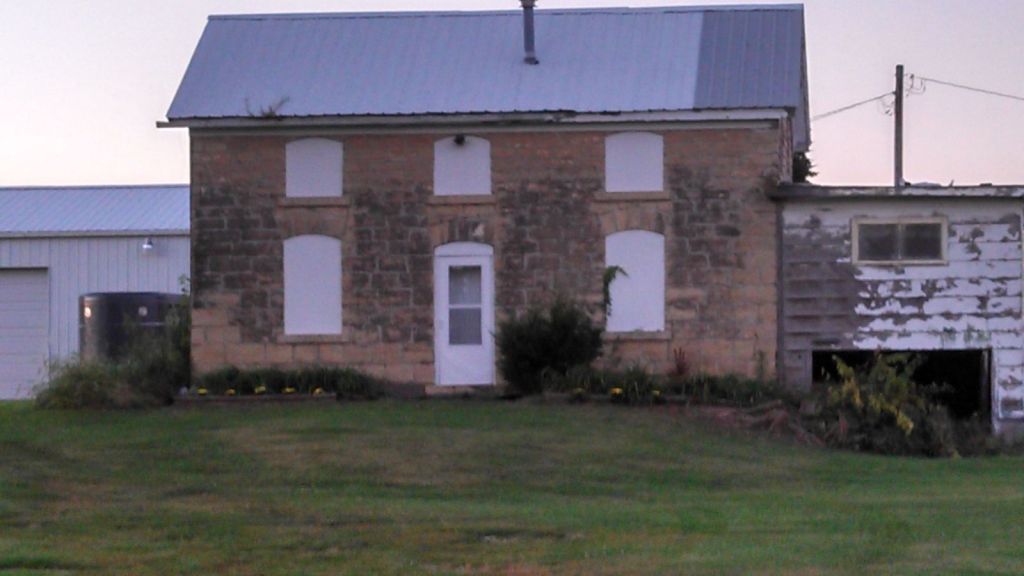
In 1876, John built a rock house, which is still there today, using native limestone quarried at Bluff Mills, about a mile from the farm and lumber. Underneath the house he built a Quonset-shaped storm cellar which was quite unique for the time as most others only have outside storm cellars. In 1916, a tornado destroyed everything on the farm except the house.
The Next Generation
After John passed away, Henry, the youngest son continued to live with his mother, Anna Marie, for several years. After his mother passed, Henry continued to live there alone. When World War 1 concluded, Henry visited cousins in Germany and met Marie Riess who he wanted to marry. However, she refused to leave Germany so Henry arranged to marry her sister, Magdalena (Joe’s grandmother). The two travelled by train to Minneapolis to get married. Together they had four children: Marie (Joe’s mother), Malinda, Oswald and Harold.
Hard Times Were Ahead
During the years of the Great Depression, Henry, like many others, couldn’t pay his debts. Thus, most of the farm was taken away. One day he met a lawyer on the street who told him to sign the rest of his farm over to the children because then nobody could touch the land until the youngest child was 21 years old. By then the Great Depression had ended and Henry had paid off all of his debts. He later earned enough money to buy part of the original farm back. The people who took away the land thought he was an old man (at that time age 65), who would die soon anyway. In the end Henry outlived them all by thirty years.
At the age of 85, Henry suffered blood clots in his leg that were moving toward his heart. He was unconscious for a long time and the doctor said there was nothing he could do about it. All of a sudden, the clots disappeared, and he lived another 15 years to celebrate his 100th birthday in 1967.
And Onto the Next Generation
When Henry was 90 years old, his youngest son Harold got married and bought the farm while Henry and his wife moved to Andrew. Harold and his wife Fern had four daughters: Kathleen, Gail, Sharon and Peggy. The family lived and farmed there for many years.
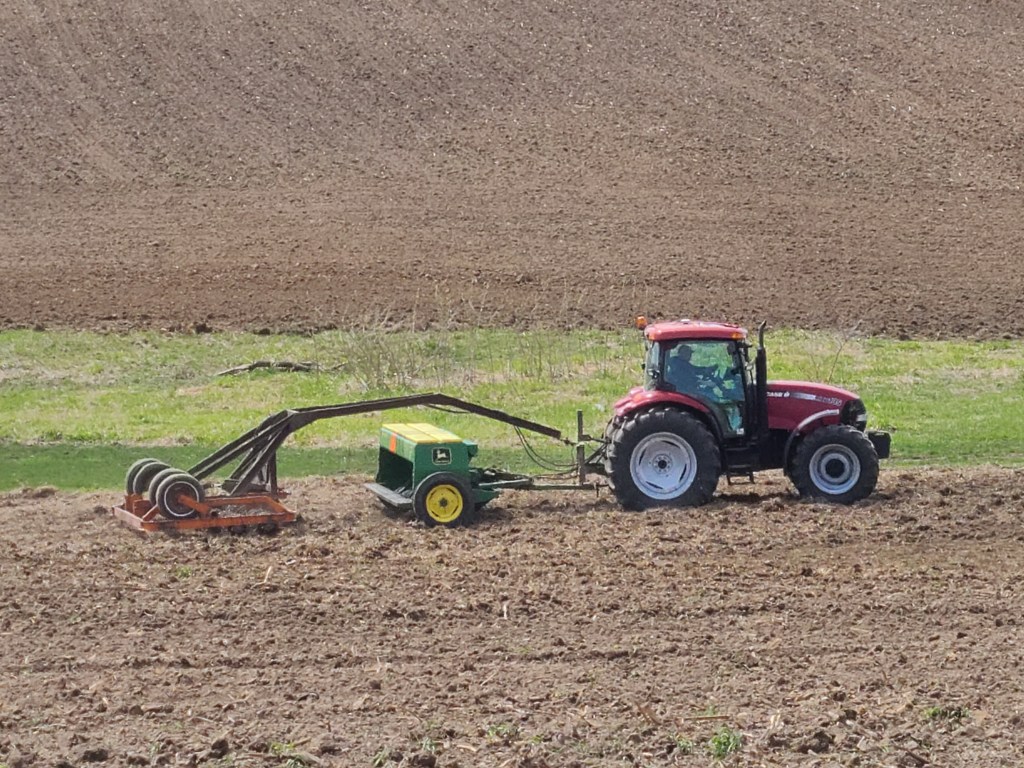
In the later part of his life Joe (Harold’s nephew), began farming with him through crop sharing. Implementing soil conservation practices and planning for the next generation, the pair worked hand in hand to continue the family legacy.
The Heritage Farm – A Symbol of Perseverance
The Heritage Farm quickly became a symbol of perseverance, it is more than just a piece of land; it’s a living testament to the enduring spirit of family and our growing passion for agriculture through each generation. A thriving testament to Joe’s great-grandpa’s vision. It has evolved and expanded over the years, adapting to changing times while still holding on to the values of family and hard work that John instilled in it.
Four families have lived in that limestone house over the last 150 years, and each has taught the younger generations the importance of preserving our family history, maintaining this vital piece of our heritage, and the life of family farming.
Currently, Joe’s daughter Jill and husband Kaleb Marshall now tend to the Heritage farm, the legacy laced in pride and a deep appreciation for this piece of land that started over a century ago continues.
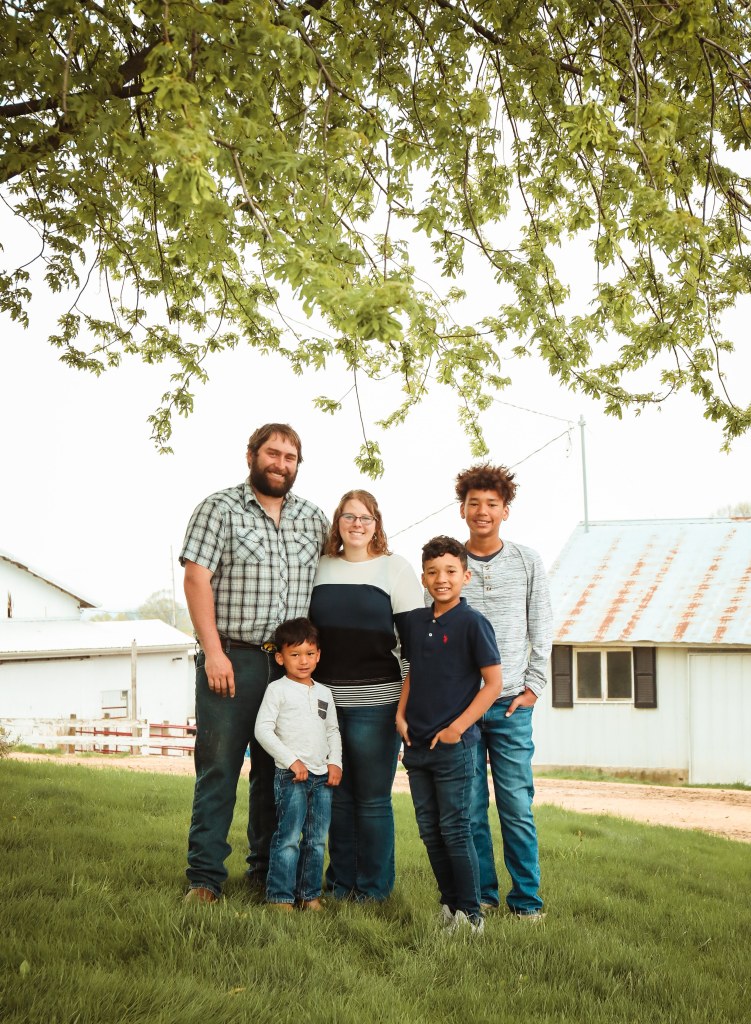
Kaleb and Jill Marshall and their 3 boys – David, Brandon and Michael are the next generation on the farm in Andrew, Iowa.
*Special thanks to Peg and Sharon Goettler for helping fill in the gaps.
Welcome to our farm stories!
We are the Heinrich Family (and more!) and we want to share how we are growing our farm one generation at a time. Together as a family we raise corn, soybeans, oats, alfalfa, dairy, beef and more!
 Heinrich Farms